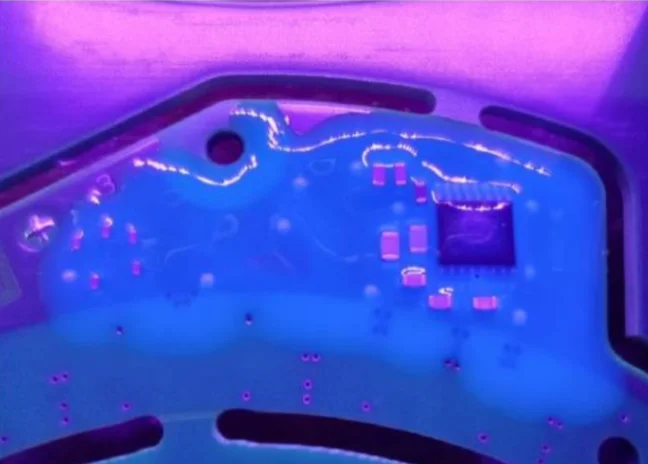
Ist es notwendig, elektronische Baugruppen vor der Schutzlackierung zu reinigen?

Cleaning electronic assemblies before conformal coating is essential for ensuring strong coating adhesion, preventing moisture penetration, and reducing electrochemical corrosion risks in modern PCB manufacturing.

Why Conformal Coating Is Used in Electronics Manufacturing

Conformal coating is widely used in electronics manufacturing to improve mainly the insulation robustness and long-term reliability of electronic assemblies in harsh environments. The protective coating also acts as a barrier against external influences such as:

  • Hohe Luftfeuchtigkeit
  • Staub und Partikel
  • Water exposure
  • Chemische Dämpfe
  • Corrosive environments
  • High-frequency vibrations
  • Temperature fluctuations

By protecting sensitive electronic components and conductor structures, conformal coatings help extend product lifetime and improve operational reliability in demanding applications.

Why Surface Cleanliness Is Critical Before Coating

For conformal coating to provide effective long-term protection, the coating layer must properly adhere to the surface of the electronic assembly. Surface contamination can significantly reduce coating adhesion and compromise the protective performance of the coating system.

Electronic assemblies may contain multiple types of contamination, including:

  • Soldering flux residues
  • Ionenverunreinigung
  • Oils and greases from handling
  • Staub und Partikel
  • Process-related residues

These contaminants can interfere with the bonding between the coating material and the PCB surface, leading to defects and reliability issues.

How Contamination Affects Coating Adhesion

When contamination remains on the surface before coating, several problems can occur:

  • Blistering of the coating layer
  • Peeling or delamination
  • Reduced hermetic protection
  • Moisture penetration beneath the coating
  • Localized coating failures

Even small amounts of contamination can create weak adhesion points where moisture and environmental contaminants may later penetrate the protective layer.

The Risk of Moisture Beneath the Coating Layer

One of the greatest risks associated with insufficient cleaning before coating is the accumulation of moisture beneath the protective layer.

When a coated electronic device is switched on during operation, the assembly temperature rises. This temperature increase also raises the pressure beneath the coating layer if trapped moisture is present.

The combination of:

  • Feuchtigkeit
  • Heat
  • Pressure
  • Ionenverunreinigung

creates ideal conditions for electrochemical corrosion to develop beneath the coating. Since the contamination remains trapped and difficult to detect, hidden corrosion processes can progress unnoticed until functional failures occur.

Electrochemical Corrosion Under Conformal Coatings

Electrochemical corrosion is one of the most critical long-term reliability threats in coated electronic assemblies. Ionic residues left on the PCB surface can become conductive when exposed to moisture, enabling leakage currents and dendritic growth between conductors.

Potential consequences include:

  • Electrical leakage
  • Short circuits
  • Reduced insulation resistance
  • Intermittent device failures
  • Premature system breakdowns

Proper cleaning before coating significantly reduces these risks by removing ionic contamination and improving coating integrity.

Why Thorough Cleaning Before Coating Is Highly Recommended

To ensure reliable conformal coating performance, assemblies should always be thoroughly cleaned before the coating process. Cleaning removes contaminants that negatively affect adhesion and helps create an activated surface that supports strong coating bonding.

A properly cleaned assembly provides:

  • Improved coating adhesion
  • Better moisture resistance
  • Higher long-term reliability
  • Reduced corrosion risk
  • Improved environmental protection
  • Enhanced product lifetime

In modern high-reliability electronics manufacturing, a reliable cleaning process before coating is considered a best-practice process step for achieving durable and robust protection.

Reinigungsmaschinen

Der Hauptgeschäftsfokus von PBT Works liegt auf dem Design und der Produktion von Reinigungsmaschinen. PBT-Reinigungsmaschinen entfernen jegliche Verunreinigungen von elektronischen Baugruppen und mikro-mechanischen Fertigungsprozessen.

Need to validate your Cleaning Process before Conformal Coating?

Reliable conformal coating starts with a clean and well-prepared PCBA surface. PBT Works helps electronics manufacturers evaluate contamination risks, optimize cleaning processes and improve long-term reliability before coating.

Reinigungsdiagnostik

Wenn Sie die Wirksamkeit Ihres Reinigungsprozesses überprüfen möchten, können unsere Reinigungsdiagnostik helfen, Kontaminationsrisiken zu identifizieren und die Prozessoptimierung zu unterstützen.

FAQs: About Cleaning Before Conformal Coating

Reinigung entfernt Flussmittelrückstände, ionische Verunreinigungen, Öle und Partikel, die die Haftung der Beschichtung reduzieren und das Risiko von Korrosion unter der Schutzschicht erhöhen können.

Wenn Verunreinigungen auf der Oberfläche verbleiben, kann die Beschichtung Blasen werfen, sich ablösen oder Feuchtigkeit eindringen lassen. Dies kann zu versteckter Korrosion und langfristigen Zuverlässigkeitsausfällen führen.

Typical contaminants include:

  • Soldering flux residues
  • Ionenverunreinigung
  • Staub und Partikel
  • Handling residues
  • Öle und Fette
  • Prozesschemikalien

Verunreinigung schafft schwache Bindungsbereiche zwischen der Beschichtung und der PCB-Oberfläche, reduziert die Haftfestigkeit und ermöglicht es Feuchtigkeit, unter die Beschichtung zu dringen.

Ja. Feuchtigkeit, die unter der Beschichtung eingeschlossen ist, kann elektrochemische Korrosion, Leckströme und elektrische Kurzschlüsse im Laufe der Zeit fördern.

Elektrochemische Korrosion tritt auf, wenn Feuchtigkeit, elektrischer Bias und ionische Kontamination zusammenkommen, um leitfähige Pfade und Korrosionsreaktionen auf der PCB-Oberfläche zu erzeugen.

Absolut. Eine ordnungsgemäße Reinigung verbessert die Haftung der Beschichtung, die Feuchtigkeitsbeständigkeit und die langfristige Haltbarkeit der Schutzschicht erheblich.

Industries with high reliability requirements include:

  • Automobilelektronik
  • Luft- und Raumfahrt sowie Verteidigung
  • Medizinelektronik
  • Industrielle Automatisierung
  • Telekommunikation
  • Leistungselektronik

Ja. Selbst No-Clean-Flux-Rückstände können Rückstände von ionischen Materialien enthalten, die die Haftung der Beschichtung und die langfristige Zuverlässigkeit unter rauen Umweltbedingungen negativ beeinflussen.

Key benefits include:

  • Improved adhesion
  • Better environmental protection
  • Reduced corrosion risk
  • Enhanced insulation resistance
  • Longer product lifetime
Facebook
LinkedIn
X
Contact us to discuss the right cleaning process before conformal coating.

info@pbt-works.com
+420 572 153 111

Unternehmen
Vor- und Nachname
E-Mail-Adresse (geschäftlich)
Land
Datenschutzerklärung
Position: 0
Auf 5 schieben, um zu bestätigen, dass Sie kein Bot sind.